Blackstone Minerals (BSX:AU) has announced Managing Director Resignation and Board Changes
Download the PDF here.
This post appeared first on investingnews.com


Blackstone Minerals (BSX:AU) has announced Managing Director Resignation and Board Changes
Download the PDF here.
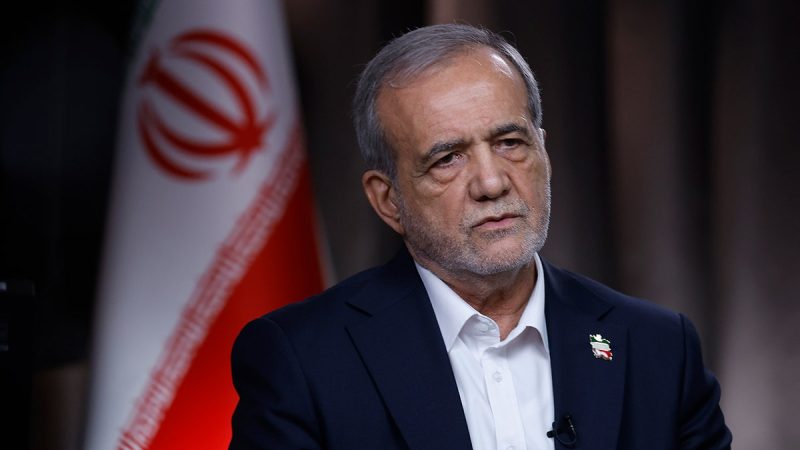
Iranian President Masoud Pezeshkian said his country is engaged in what he described as a ‘total war’ with the U.S., Israel and Europe.
In an interview published Saturday by Iranian state media, Pezeshkian said that he believes the Western powers want to bring Iran ‘to its knees,’ The Times of Israel reported.
‘In my opinion, we are at total war with the United States, Israel and Europe,’ Pezeshkian said. ‘They want to bring our country to its knees.’
Pezeshkian argued that the current conflict is more complex than the Iran-Iraq war of the 1980s, saying his country is now under pressure ‘from every angle,’ according to The Times of Israel.
‘If one understands it well, this war is far more complex and difficult than that war. In the war with Iraq, the situation was clear, they fired missiles, and we knew where to hit,’ Pezeshkian said, according to The Jerusalem Post.
‘Here, they are besieging us from every aspect, they are creating problems for us in terms of livelihood, culturally, politically, and security-wise.’
Despite the strain, Pezeshkian claimed Iran’s military emerged stronger following its June conflict with Israel, according to The Times of Israel.
‘Our beloved military forces are doing their jobs with strength and now, in terms of equipment and manpower, despite all the problems we have, they are stronger than when they attacked. So if they want to attack, they will naturally face a more decisive response,’ he said.
The interview with Pezeshkian was released ahead of a planned meeting this coming week at Mar-a-Lago between Israeli Prime Minister Benjamin Netanyahu and President Donald Trump, according to The Jerusalem Post.
Tensions remain high following a brief but intense air conflict in June that was kicked off by Israel.
The fighting resulted in roughly 1,100 deaths in Iran, including senior military commanders and nuclear scientists, while Iranian missile attacks killed 28 people in the Jewish State.
On June 22, President Donald Trump announced U.S. forces had launched attacks on Iranian nuclear sites, including Fordow, Natanz and Isfahan.
‘Our objective was the destruction of Iran’s nuclear enrichment capacity and a stop to the nuclear threat posed by the world’s number one state sponsor of terror,’ the president said. ‘Tonight, I can report to the world that the strikes were a spectacular military success. Iran’s key nuclear enrichment facilities have been completely and totally obliterated.’
A US-brokered ceasefire between Iran and Israel took effect on June 24.
Fox News Digital’s Landon Mion contributed to this report.
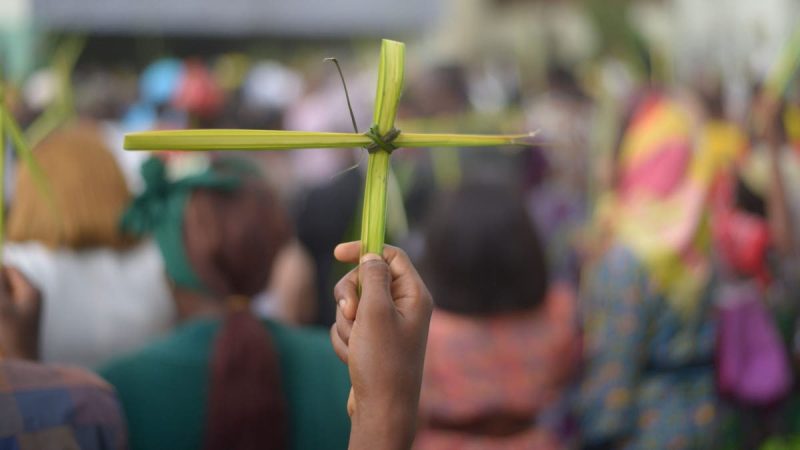
Millions of Christians in sub-Saharan Africa (SSA), spending Christmas under the reported threat of persecution, kidnapping, sexual violence and in some cases, death from Islamist militants, have seen Friday’s U.S. strikes on Islamic State militants in Nigeria as a real sign that President Trump is serious in his efforts to stop the killing of Africa’s Christians.
Over 16 million Christians are estimated to have been displaced and ripped from their homes across the region. The alleged release of 130 kidnapped schoolchildren in Nigeria this week has done little to reduce fears, as many on the continent try to worship at Christmas.
But this year, Fox News Digital has highlighted the catastrophe from Africa on multiple occasions. The situation led to senior members of Congress, including Sen. Ted Cruz, R-Texas., Rep. Chris Smith, R-N.J., and ultimately, President Donald Trump who threatened to send U.S. troops into the worst-affected country, Nigeria, ‘guns-a-blazing’, to stop the killing of Christians, has shone a light on the violence.
In Africa this Christmas, so far there’s reportedly little sign of improvement. ‘The militant Islamist onslaught across SSA is a catastrophe of global proportions unfolding before us,’ Henrietta Blyth, CEO of Open Doors UK & Ireland, told Fox News Digital this week.
Open Doors is a global Christian charity supporting Christians persecuted for their faith.
Blyth continued, ‘the last year has seen a non-stop stream of reports from sub-Saharan Africa. (including) reports of militant Islamist groups brutally attacking, among others, defenseless Christian communities.’
‘At Open Doors, we have been sounding the alarm through our Arise Africa campaign. We’ve prayed repeatedly that the campaign of terror will reach public awareness.’
Referring to Nigeria and the thousands of Christians reported to have been killed there each year and the speeches, articles and posts against the violence, Open Doors’ Blyth states, ‘There is no sign that this has abated in 2025’.
‘The lack of global outrage and action on this issue is a moral disgrace,’ South Africa’s Chief Rabbi, Dr. Warren Goldstein, told Fox News Digital. He added, ‘It seems as if black lives do not matter if they are murdered by Islamists in Africa. The persecution of Christians in Africa needs to be seen in its global context. It is part of a multi-continental jihadi war on the ‘infidels’ — Jews and Christians — and on Western values.’
He continued ‘it is a world war, with Israel at the epicenter of the fire of the jihadi forces of Iran, Hamas, Hezbollah and others. The Islamist war on Christians in Africa is another front of this world war that stretches from Sudan in the north to Mozambique in the South.’
Fox News Digital has highlighted where persecution has hit hardest in Africa in 2025:
According to Open Doors, the continent’s most populous nation saw the worst persecution in Africa in 2025, with ‘non-stop stories of deadly attacks and kidnappings’ across Nigeria’s north and Middle Belt — a litany of villages torched, citizens raped, abducted, shot and beheaded.
Pope Leo XIV spoke out this year against killings attributed to Muslim Fulani tribesmen in Nigeria’s Benue State in June, saying ‘Some 200 people were murdered, with extraordinary cruelty’.
Bishop Wilfred Anagbe’s Makurdi Diocese in north-central Nigeria is almost exclusively Christian. But the constant and escalating attacks by Islamist Fulani militants led him to testify at a congressional hearing in Washington in March. Back in Nigeria, he was threatened, and some 20 of his parishioners killed.
The war-torn country is Christian, yet the faithful are being targeted by jihadists. In February, terrorists linked to Islamic State from the so-called ADF group, who want the eastern part of the country to become a Muslim caliphate, rounded up 70 Christians and reportedly beheaded them — in a church. In September, at least Christians were reportedly slaughtered by jihadists at a funeral and in surrounding fields.
Sudan’s estimated 2 million Christians make up an estimated 4% of the country’s population,
Like the rest of Sudan’s people, they face chronic food shortages and the horror of a yearslong war. But Christians are also allegedly singled out for discrimination and persecution by both sides in the conflict.
A senior Sudanese church leader told Fox News Digital that in the Darfur city of El Fasher, that ‘now Christians are eating animal feed and grass. No wheat, no rice, nothing can get in.’
A civil conflict and weak governance have allowed armed militants to step into the vacuum of law and order, Open Doors reported. In the far north, Boko Haram and Islamic State West Africa Province regularly swoop into villages in overnight raids, killing, abducting and destroying. Thousands of people have fled their homes for displacement camps.
Ali, a villager, said ‘It never ends. I want it to end, but it doesn’t. We must sleep in the mountains for safety.’
Situated in the southwest of the continent, Mozambique has a Christian population of . Islamic State Mozambique is causing havoc in the far north, targeting Christian communities, burning their churches and destroying homes. The killings have multiplied this year, and thousands more are fleeing their homes, joining more than who have already been displaced.
In one mass attack on the village of Napala in October, Open Doors reported militants killed 20 Christians and displaced some 2,000. A local pastor described how four elderly sisters were tied up and burned to death inside a house.
On the airstrikes in Nigeria, Open Doors’ Henrietta Blyth told Fox News Digital, ‘a military operation like this is not going to provide any sort of quick fix for decades of violence. The Nigerian government must pursue lasting solutions that ensure peace, protection of civilians and religious freedom for everyone.’
Chief Rabbi Goldstein concluded, ‘The West can only win this war if it can find the moral clarity to call it by its name and see all the theaters of war as part of the same fight.’

Jeffrey Christian, managing partner at CPM Group, shares his outlook for gold and silver in 2026, explaining why he expects higher prices for the metals.
‘We think that 2026 is going to be a more hostile environment than 2025, and that will cause investors to buy more gold and silver. So we’re expecting gold and silver prices to spike higher than they are today at times during 2026,’ he explained.
Securities Disclosure: I, Charlotte McLeod, hold no direct investment interest in any company mentioned in this article.

Kicking off the list in the fifth spot is Don Durrett of GoldStockData.com.
In this January interview, Don shared his silver and gold price outlook for 2025, as well as his 15 ‘must-own’ silver stocks. We don’t have time here for the full list, but I’ll leave the link to the video below. For now, here’s Don talking about why he’s so bullish on silver and gold stocks.
Peter Grandich of Peter Grandich & Co. is next.
This interview is from all the way back in February, when gold was still around US$2,800 per ounce. Peter talked about how US$5,000 was no longer sounding outlandish to him, and also explained how the higher gold price could impact mining companies.
Vince Lanci of Echobay Partners is always a popular guest, and in mid-October he helped break down unusual dynamics in silver, which had broken through US$50 per ounce.
Ed Steer of Ed Steer’s Gold and Silver Digest comes in at number two. This interview is also from mid-October, and in it Ed weighed in on the silver market’s complex inner workings. Ed also gave his thoughts on the precious metal’s long-term prospects.
Finally, our most popular interview of 2025 was with none other than Rick Rule of Rule Investment Media. In this early November conversation, he said he had recently sold 25 percent of his junior gold stocks; he also explained why he did it and how he redeployed that capital.
Securities Disclosure: I, Charlotte McLeod, hold no direct investment interest in any company mentioned in this article.
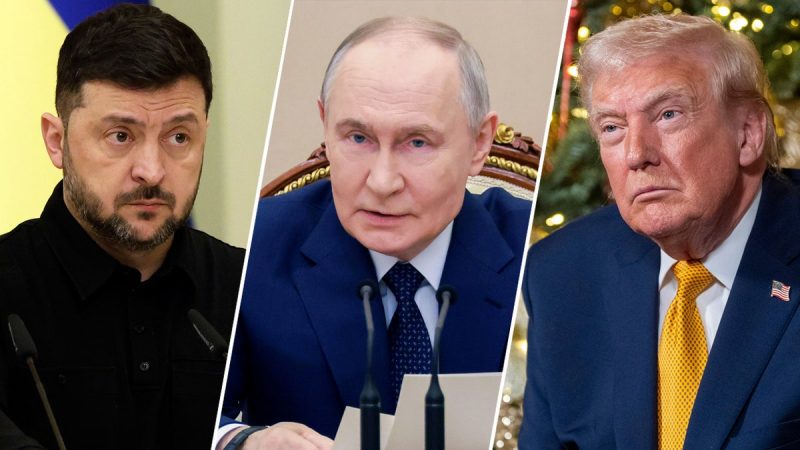
A fresh Russian attack against Kyiv involving hundreds of drones and dozens of missiles is putting the ‘true attitude of Putin and his inner circle’ on display, Ukrainian President Volodymyr Zelenskyy said Saturday, as he prepared to meet with President Donald Trump.
The overnight blitz in Ukraine’s capital left at least one person dead and 27 injured, local authorities told the Associated Press. It unfolded as Zelenskyy is set to meet with Trump in Florida on Sunday, where he said he will share a 20-point peace proposal to end the conflict with Russia.
‘Another Russian attack is still ongoing: since last night, there have been almost 500 drones – a large number of ‘shaheds’ – as well as 40 missiles, including Kinzhals. The primary target is Kyiv – energy facilities and civilian infrastructure,’ Zelenskyy wrote on X on Saturday morning. ‘Regrettably, there have been hits, and ordinary residential buildings have been damaged. Rescuers are searching for a person trapped under the rubble of one of them.’
‘There have been many questions over the past few days – so where is Russia’s response to the proposals to end the war offered by the United States and the world? Russian representatives engage in lengthy talks, but in reality, Kinzhals and ‘shaheds’ speak for them. This is the true attitude of Putin and his inner circle,’ Zelenskyy added. ‘They do not want to end the war and seek to use every opportunity to cause Ukraine even greater suffering and increase their pressure on others around the world.’
Zelenskyy also said Saturday that, ‘If Russia turns even the Christmas and New Year period into a time of destroyed homes and burned apartments, of ruined power plants, then this sick activity can only be responded to with truly strong steps.’
‘The United States has this capability. Europe has this capability. Many of our partners have this capability. The key is to use it,’ he declared.
Trump, ahead of the meeting with Zelenskyy, has said he will call the final shots on a peace deal to end the conflict.
‘He doesn’t have anything until I approve it,’ Trump told Politico Friday. ‘So we’ll see what he’s got.’
The Russian Defense Ministry said Saturday that it carried out a ‘massive strike’ overnight, using ‘long-range precision-guided weapons from land, air, and sea, including Kinzhal hypersonic aeroballistic missiles’ and drones, on energy infrastructure facilities ‘used by the Ukrainian Armed Forces,’ as well as ‘Ukrainian military-industrial complex enterprises.’
The ministry said the strike came in response to Ukraine’s attacks on ‘civilian objects’ in Russia.
Earlier on Saturday, the ministry said its air defenses shot down seven Ukrainian drones over the Russian regions of Krasnodar and Adygeya overnight.
Fox News Digital’s Diana Stancey and The Associated Press contributed to this report.
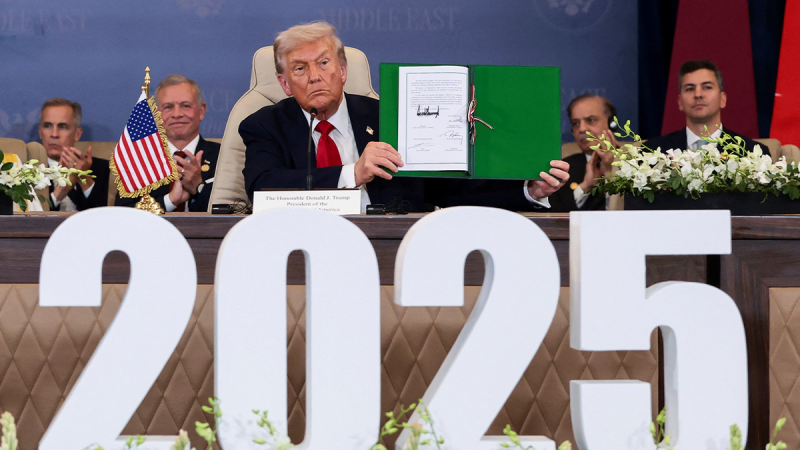
Donald Trump entered 2025 pledging to end wars and reorient U.S. foreign policy around what he repeatedly described as ‘peace through strength.’
Throughout the year, Trump has cast his diplomacy as peace-focused, telling reporters, ‘We think we have a way of getting peace,’ and publicly arguing that his record merited a Nobel Peace Prize. The U.S. State Department echoed that framing in its year-end summary of diplomatic efforts, highlighting initiatives it said aimed to ‘secure peace around the world.’
By the close of 2025, several conflicts saw impressive diplomatic progress, while others were still experiencing issues after years of hatred and violence.
The most consequential diplomatic development of the year came in early October, when the Trump administration helped broker a ceasefire framework between Israel and Hamas. The agreement halted large-scale fighting after months of intense combat and enabled the release of all remaining hostages from Hamas’ Oct. 7 attack on Israel, except for the body of Ron Gvili that remains held captive by Hamas terrorists.
The administration later cited the ceasefire as a central element of its 2025 diplomatic record. While the truce largely held through the end of the year, core issues including Gaza’s long-term governance, demilitarization and enforcement mechanisms remained unresolved, as well as rebuilding the enclave after the massive destruction and displacement. U.S. officials continued working with regional partners on next steps as fighting paused, as Israel’s Netanyahu is expected to meet with President Trump next week for talks on Gaza and other issues.
In August, Trump hosted the leaders of Armenia and Azerbaijan at the White House for a U.S.-brokered peace declaration aimed at addressing decades of conflict tied to Nagorno-Karabakh. The agreement focused on transit routes, economic cooperation and regional connectivity and was promoted by the administration as a historic step.
While the historic declaration was signed, implementation and deeper reconciliation is still ongoing.
Ukraine remained the most ambitious and elusive peace target of Trump’s 2025 agenda. The year opened with Trump insisting the war could be ended through direct U.S. engagement and leverage over both Kyiv and Moscow. Diplomacy intensified in August, when Trump hosted Russian President Vladimir Putin in Alaska, a summit framed by the White House as a test of whether personal diplomacy could unlock a settlement.
In parallel, Ukrainian President Volodymyr Zelenskyy was received at the White House, where Trump reiterated U.S. support for Ukraine while signaling that any peace would require difficult compromises. U.S. officials explored security guarantees and economic incentives, while avoiding public commitments on borders or NATO membership.
By December, talks accelerated. Ukraine entered new rounds of U.S.-led negotiations, and Trump told reporters the sides were ‘getting close to something.’ On Christmas Zelenskyy said talks with U.S. officials had produced a 20-point plan and accompanying documents that include security guarantees involving Ukraine, the United States and European partners. He acknowledged the framework was not flawless but described it as a tangible step forward. Zelenskyy is reportedly readying a visit to meet with President Trump, possibly as soon as Sunday.
Bloomberg reported that Russia views the 20-point plan agreed to between Ukraine and the U.S. as only a starting point. According to a person close to the Kremlin, Moscow intends to seek key changes, including additional restrictions on Ukraine’s military, arguing that the proposal lacks provisions important to Russia and leaves many questions unanswered.
In early December, Trump hosted the signing of the Washington Accords for Peace and Prosperity between the Democratic Republic of Congo and Rwanda. The agreement reaffirmed commitments to end decades of conflict and expand economic cooperation through a regional integration framework.
By the end of the year, Reuters and the Associated Press reported that armed groups remained active in eastern Congo, underscoring the fragility of the accord, though both sides seemed to be invested in a long-term peace.
After a terrorist attack in Kashmir and retaliatory strikes raised fears of escalation, U.S. officials engaged in emergency diplomacy. Trump announced a ceasefire between the two nuclear-armed rivals, with a potentially catastrophic escalation between the two nuclear powers avoided.
On the sidelines of an ASEAN summit, Trump helped mediate a ceasefire between Cambodia and Thailand following months of border clashes.
Diplomatic efforts led by ASEAN and supported by external parties are ongoing, but fresh clashes and mutual recriminations between Thailand and Cambodia continue to challenge peace prospects and have led to large-scale displacement and civilian harm. Following the recent flare-ups, and with offers for mediation from Secretary of State Marco Rubio, a new ceasefire was agreed upon on Saturday to end weeks of fighting on the border.
Following U.S. and Israeli strikes on Iranian nuclear facilities, the Trump administration focused on containing escalation and reinforcing deterrence. No diplomatic agreement followed, but the confrontation did not expand into a broader regional war by year’s end.
Recently Israel warned that Iran might use its ballistic missile drills as a cover for a surprise attack.
Sudan remained one of the world’s deadliest conflicts. U.S. diplomacy has focused primarily on efforts to halt fighting and expand humanitarian access rather than brokering a comprehensive peace.
In December, Saudi Arabia and the United States presented Sudanese army chief Abdel Fattah al-Burhan with a three-point proposal aimed at ending the war, facilitating aid delivery and transferring power to civilians, according to Sudan Tribune.
As the year closed, Venezuela emerged as the United States’ clearest point of direct confrontation. The administration framed its posture as an extension of its broader ‘peace through strength’ doctrine, even as the risk of escalation lingered.
While the White House pursued de-escalation and negotiated arrangements elsewhere, its approach toward Nicolás Maduro relied almost entirely on pressure, not talks. Trump continued to cast Maduro as a criminal threat tied to drug trafficking, accusing him of rejecting the results of Venezuela’s last election and stealing the presidency.
With no diplomatic channel open, the U.S. maintained sweeping sanctions and stepped up efforts against cartel networks linked to the regime. There was no peace process in sight — but some opposition figures and U.S. allies argued that sustained pressure could still force political change in 2026, and ultimately hasten the end of Maduro’s rule.

Capitol Hill is a ghost town with both the House and Senate out of session until a few days into the new year.
Lawmakers left town the week before Christmas, and with their departure have left several key fights unresolved — with deadlines looming large for both Republicans and Democrats.
Congress voted to end the longest-ever government shutdown in history last month after 43 days of gridlock.
But lawmakers did not strike a deal on federal funding for the rest of fiscal year (FY) 2026, which they’re expected to do annually. Instead, they passed a portion of FY 2026 funding while punting the deadline for the majority of areas to Jan. 30.
Senate Republicans had hoped to strike a deal on the vast majority of the remaining funds before leaving town, but various objections from senators on both sides of the aisle delayed an actual vote.
Now, that legislation will have to be reckoned with in early January. During that month, the House and Senate will only have a total of eight days in session together before the Jan. 30 deadline.
The Senate will have 15 total days in session, while the House will have 12.
Millions of people across the country are expected to see an increase in how much they pay for healthcare premiums every month starting in January.
Congress, meanwhile, has failed to pass a compromise between the House and Senate to help Americans deal with the rising cost.
For some Americans on Obamacare, part of that is due to COVID-19 pandemic-era enhanced subsidies expiring at the end of 2025.
Republicans have largely rejected the notion of extending those subsidies, at least without significant reforms. But a small group of moderate GOP lawmakers are pushing for a short-term extension to give Congress time to create a more permanent system for lowering costs.
The House passed a healthcare reform bill aimed at expanding options in the commercial insurance marketplace the week before leaving town. In the Senate, however, dueling plans by Republicans and Democrats failed to advance.
It will now be an issue for GOP congressional leaders to tackle in 2026 — while Democrats are likely to seize on it as an election-year issue.
Mid-decade redistricting has upended state and federal politics across the U.S. this year, with President Donald Trump pushing multiple GOP-controlled states to change their congressional lines in order to give Republicans an advantage in the 2026 midterms.
Democrat-led states like California have responded by moving to redraw their own maps to give the left an advantage. It’s resulted in prolonged court battles on both sides.
In Texas, where new maps could give Republicans as many as five new House seats, the Supreme Court granted an emergency stay on a lower court’s order allowing the GOP-led initiative to move forward.
The federal court battle over the Golden State’s new map is likely to draw into the new year. Meanwhile, states like Virginia, Illinois, Alabama, and Louisiana could still move to make new lines before next November.
Multiple House lawmakers have introduced legislation to ban mid-decade redistricting, but to no avail so far.
House Minority Leader Hakeem Jeffries, D-N.Y., warned at a press conference earlier this month, ‘Republicans may have started this redistricting battle. We as Democrats plan to finish it.’
Speaker Mike Johnson, R-La., by contrast, has taken a largely hands-off approach, preferring to leave the matter to state legislatures and the courts.
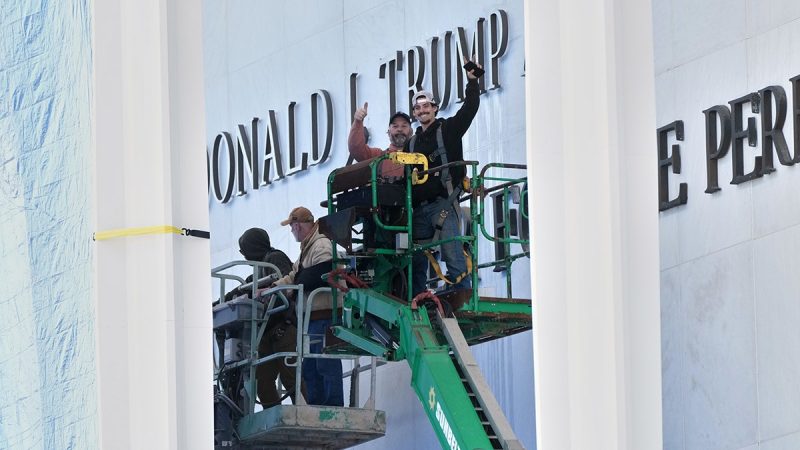
A Christmas Eve jazz concert at the Kennedy Center was canceled just days after the White House announced that President Donald Trump’s name would be added to the iconic performing arts institution in Washington, D.C.
The show’s host, musician Chuck Redd, who has led the holiday ‘Jazz Jams’ at the Kennedy Center since 2006, said he called off his performance after Trump’s name was added to the facility.
‘When I saw the name change on the Kennedy Center website and then hours later on the building, I chose to cancel our concert,’ Redd told the Associated Press.
Fox News Digital has reached out to the Kennedy Center for comment. The Kennedy Center’s website lists the show as canceled.
The Kennedy Center’s board voted unanimously on Dec. 18 to rename the institution the ‘Trump-Kennedy Center,’ prompting swift backlash from members of the Kennedy family who said the decision undermined the legacy of President John F. Kennedy.
Maria Shriver, Kennedy’s niece, criticized the decision, calling it ‘beyond comprehension.’
Last week, workers added Trump’s name to the outside of the center, and the website’s header was changed to ‘The Trump Kennedy Center.’
Another Kennedy niece, Kerry Kennedy, vowed to remove Trump’s name from the building after he leaves office.
President Lyndon Johnson signed a bill in 1964 that designated the center as a living memorial to Kennedy following his assassination in 1963. The law prohibits the board of trustees from making the center into a memorial to anyone else or from putting another person’s name on the building’s exterior, the AP reported.
Trump was elected chairman of the Kennedy Center board in February, after removing 18 trustees appointed by former President Joe Biden.
Since Trump returned to office on Jan. 20, several artists have canceled performances at the Kennedy Center, including Lin-Manuel Miranda, who called off a production of ‘Hamilton.’
Redd has toured worldwide and performed with numerous musicians, including Dizzy Gillespie, according to his website bio.
Fox News Digital has reached out to Redd for comment.
The Associated Press contributed to this report.

North Korea showed off its apparent progress in the development of a nuclear-powered submarine. State media released photos of North Korean dictator Kim Jong Un and his daughter, a potential heir, as they inspected what appears to be a largely completed hull.
The Korean Central News Agency (KCNA), North Korea’s official state media, said Kim and his daughter visited the shipyard to examine the construction of what it describes as an 8,700-ton-class nuclear-propelled submarine, The Associated Press reported. Pyongyang has signaled that it plans to arm the submarine with nuclear weapons, the AP noted. Kim has said the development of the submarine is a crucial step toward the modernization and nuclear armament of his country’s navy.
The Christmas Day release of the photos marks the first time North Korean state media has shown an update on the nuclear-powered submarine since March. Earlier images mostly showed the lower sections of the vessel, the AP noted. The KCNA did not say when the photos released on Thursday were taken.
Moon Keun-sik, a submarine expert at Seoul’s Hanyang University, told the AP that the photos of a largely completed hull indicate that many of the core components are already in place, as submarines are typically built from the inside out. However, it was not immediately clear exactly how much progress Pyongyang had made.
‘Showing the entire vessel now seems to indicate that most of the equipment has already been installed and it is just about ready to be launched into the water,’ Moon, who also served as a submarine officer in the South Korean navy, told the AP. Moon added that North Korea’s submarine could be ready for testing at sea within months.
While at the shipyard, Kim condemned South Korea’s efforts to develop its own nuclear-powered submarine as an ‘offensive act,’ despite the fact that President Donald Trump has backed Seoul’s push toward the technology. Kim said South Korea’s efforts violate North Korea’s security and maritime sovereignty, according to the AP.
In October, during his tour of Asia aimed at securing investments, Trump said that the U.S. would share technology with South Korea that would allow it to build a nuclear-powered submarine. The president posted on Truth Social that the vessel would be built in Philadelphia.
‘South Korea will be building its nuclear-powered submarine in the Philadelphia shipyards, right here in the good ol’ U.S.A. Shipbuilding in our country will soon be making a BIG COMEBACK,’ the president wrote.
The White House underscored the point when it released a fact sheet in November which directly referenced Washington and Seoul’s efforts to ‘further our maritime and nuclear partnership.’
The Associated Press contributed to this report.